

Early-stage ventures in West Africa face significant legal friction during their first eighteen months. Recent economic data shows that 68 percent of regional startups encounter contract disputes before securing their first institutional round. This friction often stems from misaligned clauses, unclear liability boundaries, and non-compliance with regional commercial codes. Founders must understand exactly who reviews contracts for startups in Senegal to protect equity and operational continuity. Professional legal oversight remains the only reliable mechanism to neutralize these early risks.
Understanding the OHADA Legal Framework
Southeast Senegal operates under the harmonized commercial laws of the Organisation for the Harmonization of Business Law in Africa. This regional treaty standardizes corporate governance, commercial transactions, and dispute resolution across sixteen member states. Founders must align every operational agreement with these baseline requirements to maintain legal enforceability. OHADA compliance is the foundational requirement for all commercial activity in the region. Local legal advisors specialize in translating these treaty obligations into actionable startup frameworks. They verify that corporate structures, shareholder agreements, and vendor contracts meet the exact statutory thresholds. When founders ignore these harmonized rules, courts routinely invalidate critical operational documents. Professional contract review ensures that your corporate governance aligns with both national statutes and regional treaties. This alignment prevents costly litigation and preserves investor confidence during fundraising cycles.
Core Contract Types Requiring Expert Review
Startups generate multiple document categories during their initial growth phase. Each category carries distinct legal exposure and requires specialized scrutiny. Founders typically engage legal professionals to examine equity distribution agreements, intellectual property assignments, and commercial vendor contracts. These documents dictate ownership boundaries, revenue sharing, and operational liabilities. Equity distribution agreements are formal legal instruments that define ownership percentages and voting rights among founders and early investors. Intellectual property assignments transfer creative assets from individual creators to the corporate entity. Commercial vendor contracts establish service delivery timelines, payment schedules, and performance benchmarks. Employment agreements outline compensation structures, non-compete restrictions, and termination procedures. Investors conduct rigorous due diligence on every document before releasing capital. A single unreviewed clause can trigger valuation discounts or complete deal termination. Professional advisors systematically audit each document category to eliminate hidden liabilities and enforceable ambiguities.
The Startup Contract Review Process
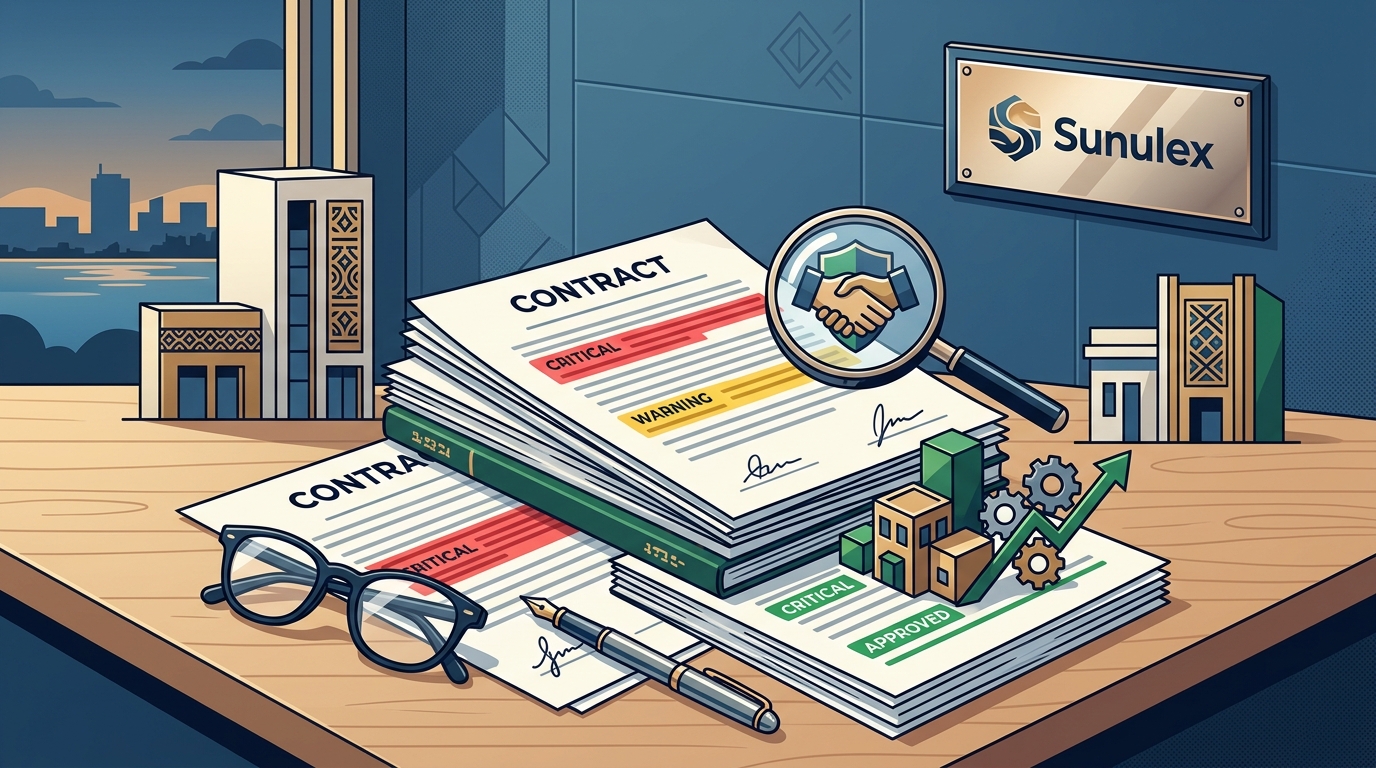
Legal professionals follow a structured methodology to evaluate startup agreements. The initial phase involves comprehensive document collection and jurisdictional mapping. Reviewers then cross-reference each clause against current commercial codes and sector-specific regulations. They identify conflicting obligations, missing indemnification language, and ambiguous termination triggers. The final phase delivers a prioritized revision roadmap with actionable amendments. Contract review is the systematic evaluation of legal agreements to identify risks, ensure regulatory compliance, and protect stakeholder interests. This process typically requires three to five business days for standard operational documents. Complex fundraising rounds or cross-border partnerships demand extended analysis windows. Reviewers utilize standardized checklists to guarantee consistent quality across all deliverables. Founders receive annotated drafts highlighting problematic language and recommended replacements. This collaborative approach ensures that business objectives remain intact while legal exposure is minimized. The final output includes a compliance matrix mapping each clause to its corresponding statutory requirement.
Key Clauses Every Founder Must Verify
Certain contractual provisions consistently trigger disputes among early-stage companies. Founders must verify indemnification boundaries, intellectual property ownership, and termination triggers before signing any agreement. These clauses dictate financial responsibility, asset control, and exit pathways. Indemnification clauses are contractual provisions that allocate financial responsibility for losses, damages, or legal costs between contracting parties. Intellectual property ownership provisions determine whether the startup or the creator retains exclusive rights to developed technology. Termination triggers establish the exact conditions under which either party can dissolve the agreement without penalty. Liability caps limit the maximum financial exposure for both vendors and founders. Dispute resolution mechanisms specify whether conflicts will proceed through local arbitration or regional courts. Founders should never accept boilerplate language without verifying these critical provisions. Professional advisors rewrite ambiguous terms to reflect actual business expectations and risk tolerance. This proactive approach prevents costly litigation and preserves operational momentum.
Selecting the Right Legal Partner
Not all legal service providers possess the specialized expertise required for startup ecosystems. Founders must evaluate advisors based on regional experience, sector familiarity, and technological fluency. The ideal partner understands both traditional commercial law and modern startup financing structures. They maintain active relationships with local regulatory bodies and venture capital networks. Legal partner selection is the strategic evaluation of advisory firms based on regional expertise, startup sector familiarity, and proven transactional success. Founders should request case studies demonstrating successful contract negotiations for similar business models. They must verify that advisors maintain current certifications under Senegalese professional regulations. Transparent communication protocols and predictable billing structures remain essential for long-term collaboration. The best advisors integrate seamlessly with founding teams and provide proactive risk assessments. This partnership model transforms legal compliance from a reactive burden into a strategic advantage. Founders gain confidence knowing their operational documents align with both current regulations and future scaling objectives.
Cost Structures and Service Tiers
Legal advisory fees vary significantly based on document complexity and jurisdictional requirements. Most professional firms offer tiered pricing models designed to accommodate early-stage budget constraints. Founders typically choose between standard operational reviews, comprehensive compliance audits, or ongoing retainer arrangements. Standard reviews cover basic vendor agreements and employment contracts. Comprehensive audits examine equity structures, intellectual property portfolios, and cross-border transactions. Ongoing retainers provide continuous legal support for rapid scaling phases. Service tier pricing is a structured billing model that categorizes legal advisory fees based on document complexity, jurisdictional scope, and required review depth. Transparent pricing eliminates unexpected expenses and allows founders to allocate capital efficiently. Many advisory firms offer discounted packages for registered startups operating within recognized innovation hubs. These programs align legal costs with actual business growth trajectories. Founders should request detailed scope definitions before committing to any engagement. This clarity ensures that all necessary protections are included without paying for unnecessary administrative overhead.
| Service Category | Primary Focus | Typical Turnaround | Best For |
|---|---|---|---|
| Standard Operational Review | Vendor agreements and employment contracts | 3 to 5 business days | Early-stage companies establishing basic operations |
| Comprehensive Compliance Audit | Equity structures and intellectual property portfolios | 7 to 10 business days | Startups preparing for institutional fundraising |
| Ongoing Advisory Retainer | Continuous legal support and rapid document drafting | 24 to 48 hours per request | Scaling ventures requiring frequent contract updates |
| Cross-Border Transaction Review | International partnerships and foreign jurisdiction compliance | 10 to 14 business days | Companies expanding operations into neighboring markets |
Key Takeaways
- 68 percent of West African startups encounter contract disputes before securing institutional funding.
- OHADA harmonized commercial laws govern all corporate transactions across sixteen member states.
- Professional contract review typically requires three to five business days for standard operational documents.
- Indemnification clauses allocate financial responsibility for losses and legal costs between contracting parties.
- Standard operational reviews focus on vendor agreements and employment contracts.
- Comprehensive compliance audits examine equity structures and intellectual property portfolios.
- Ongoing advisory retainers provide continuous legal support for rapid scaling phases.
Frequently Asked Questions
How much does professional contract review cost in Senegal?
Standard operational reviews typically range from 150,000 to 350,000 West African CFA francs. Comprehensive compliance audits generally cost between 400,000 and 750,000 West African CFA francs. Pricing depends on document complexity, jurisdictional requirements, and required review depth. Founders should request detailed scope definitions before committing to any engagement.
Which legal framework governs startup contracts in Senegal?
Southeast Senegal operates under the harmonized commercial laws of the Organisation for the Harmonization of Business Law in Africa. This regional treaty standardizes corporate governance, commercial transactions, and dispute resolution across sixteen member states. Founders must align every operational agreement with these baseline requirements to maintain legal enforceability.
How long does a standard contract review take?
Professional advisors typically complete standard operational document reviews within three to five business days. Complex fundraising rounds or cross-border partnerships demand extended analysis windows of seven to fourteen business days. Reviewers utilize standardized checklists to guarantee consistent quality across all deliverables.
What happens if a startup signs an unreviewed contract?
Unreviewed agreements frequently contain ambiguous termination triggers, missing indemnification language, and conflicting liability boundaries. Courts routinely invalidate critical operational documents when founders ignore harmonized regional rules. Professional contract review ensures that corporate governance aligns with both national statutes and regional treaties.
Can startups access discounted legal advisory services?
Many advisory firms offer discounted packages for registered startups operating within recognized innovation hubs. These programs align legal costs with actual business growth trajectories. Founders should verify that advisors maintain current certifications under Senegalese professional regulations.
Do legal advisors handle cross-border contract negotiations?
Specialized legal partners routinely manage cross-border transactions involving neighboring markets and international investors. They verify that corporate structures, shareholder agreements, and vendor contracts meet the exact statutory thresholds. This alignment prevents costly litigation and preserves investor confidence during fundraising cycles.
What documents require the most rigorous legal scrutiny?
Founders typically engage legal professionals to examine equity distribution agreements, intellectual property assignments, and commercial vendor contracts. These documents dictate ownership boundaries, revenue sharing, and operational liabilities. Investors conduct rigorous due diligence on every document before releasing capital.
Secure Your Startup Legal Foundation
Founders must prioritize professional contract review to protect equity and operational continuity. Early-stage ventures face significant legal friction during their first eighteen months. Professional legal oversight remains the only reliable mechanism to neutralize these early risks. Schedule a comprehensive document audit today to eliminate hidden liabilities and enforceable ambiguities. Visit our advisory portal to access standardized review templates and compliance checklists. Book your startup contract review consultation and secure the legal protections your business requires. Our team delivers actionable revision roadmaps within standard turnaround windows. Protect your intellectual property, align with regional commercial codes, and scale with confidence.