

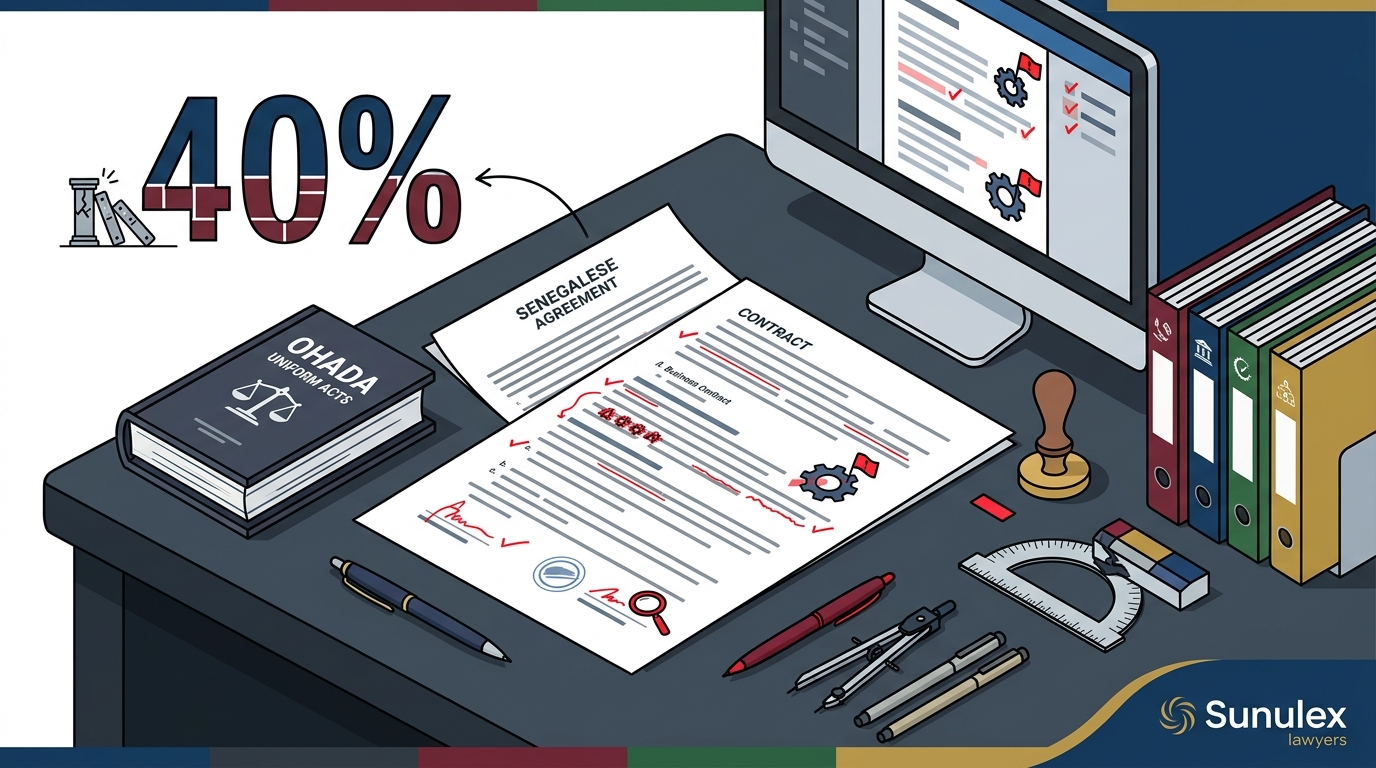
Legal oversight is the silent killer of early-stage ventures in West Africa. According to recent business climate reports, nearly 40% of startup failures in emerging markets are linked to poorly structured agreements rather than product-market fit issues. For founders in Dakar and beyond, navigating the OHADA (Organization for the Harmonization of Business Law in Africa) framework is not optional. It is the bedrock of operational survival. This guide details the critical errors that derail deals and how to avoid them.
Understanding the OHADA Legal Framework
Senegal operates under the OHADA treaty, which harmonizes business laws across 17 African member states. OHADA is a legal system designed to unify commercial laws across West and Central Africa. Startups often mistakenly apply common law principles from Europe or the US, leading to unenforceable clauses. The Uniform Act on Commercial Companies is particularly relevant for corporate structure. Ignoring these uniform acts can invalidate shareholder agreements or partnership contracts. You must ensure your legal foundation respects the supranational nature of this system. For deeper insights into regional legal standards, refer to OHADA official resources.
Why Uniformity Matters
Consistency in legal interpretation reduces risk. When your contracts align with OHADA standards, you gain predictability in cross-border disputes. This is crucial for startups seeking investment from other member states. It signals professionalism to international partners and investors. World Bank trade data highlights the importance of legal certainty in emerging markets.
Jurisdiction and Governing Law Errors
One of the most frequent mistakes is vague jurisdiction clauses. Founders often write "disputes will be resolved in court" without specifying which court. This ambiguity leads to procedural nightmares. You must explicitly state the competent court, such as the Tribunal de Grande Instance in Dakar. If your startup operates internationally, consider arbitration. The CCJA (Common Court of Justice and Arbitration) is the OHADA arbitration body. It offers a specialized forum for business disputes. CCJA arbitration rules provide a robust framework for cross-border enforcement.
Local vs. International Arbitration
Choosing between local courts and international arbitration depends on your partner's location. Local courts are cost-effective for domestic disputes. International arbitration is preferred for cross-border contracts due to the New York Convention. This convention facilitates the enforcement of arbitral awards in over 170 countries. UNCITRAL New York Convention details the global enforcement mechanisms.
Payment and Currency Clause Pitfalls
Senegal uses the West African CFA franc (XOF). Startups often draft contracts in euros or dollars without addressing currency fluctuation risks. Currency fluctuation risk is a critical financial exposure for businesses using the CFA franc. If your revenue is in euros but your costs are in XOF, exchange rate volatility can erase margins. Always include a currency adjustment clause or peg payments to a stable index. Specify the payment method clearly, such as bank transfer or mobile money. Mobile money is ubiquitous in Senegal, so include it as a valid payment option. IMF reports on the CFA franc explain its peg to the euro.
Invoice Terms and Late Payments
Define clear payment terms, such as Net 30 or Net 60. Include late payment penalties to encourage timely settlement. In Senegal, legal interest rates for late payments are regulated. Ensure your penalty clauses comply with local usury laws. Legislationline compliance guides offer insights into regional financial regulations.
Termination and Dispute Resolution Flaws
Contracts often lack clear termination triggers. Founders assume relationships will last forever. This is a dangerous assumption. Define specific events that allow for termination, such as breach of contract, insolvency, or force majeure. Force majeure clauses are essential in regions prone to logistical disruptions. Specify what constitutes a force majeure event, such as political instability or natural disasters. UNIDROIT principles provide guidance on force majeure in international contracts.
Notice Periods and Cure Clauses
Include a notice period for termination, typically 30 to 90 days. Allow for a "cure period" where the breaching party can fix the issue. This fosters collaboration and avoids premature contract dissolution. Without a cure clause, minor breaches can lead to immediate termination. This can disrupt operations and damage business relationships. ICDR dispute resolution guidelines highlight best practices for notice periods.
Intellectual Property Oversights
Startups often neglect IP protection in their contracts. You must define who owns the intellectual property created during the engagement. If you hire developers or designers, ensure the contract includes an IP assignment clause. Without this, the creator may retain ownership of the work. This can prevent you from scaling or selling your company. Register your trademarks with the African Intellectual Property Organization (OAPI). OAPI covers Senegal and 16 other countries. OAPI trademark registration is the first step in protecting your brand.
Confidentiality and Non-Compete Clauses
Include robust confidentiality agreements (NDAs) to protect trade secrets. Define the scope of non-compete clauses carefully. In Senegal, non-compete clauses must be limited in time and geography to be enforceable. Overly broad restrictions may be deemed void by courts. WIPO intellectual property resources provide detailed standards for regional IP protection.
Comparison of Common Contract Types
Understanding the nuances of different contracts is vital for startup success. Each type serves a specific purpose and carries unique risks. The table below summarizes key considerations for common agreements used by Senegalese startups.
| Contract Type | Primary Purpose | Key Risk to Avoid | Recommended Action |
|---|---|---|---|
| Service Agreement | Defining scope of work for vendors | Vague deliverables | Specify exact milestones and acceptance criteria |
| Shareholder Agreement | Outlining ownership and control | Deadlock in decision-making | Include clear voting rights and exit strategies |
| Employment Contract | Regulating employee relations | Non-compliance with labor law | Adhere strictly to Senegal's Labor Code |
| NDA | Protecting confidential information | Overly broad scope | Limit duration and geographic reach |
Key Takeaways
- OHADA Compliance: All commercial contracts in Senegal must align with OHADA uniform acts to ensure enforceability.
- Jurisdiction Clarity: Specify the exact court or arbitration body to avoid procedural delays in dispute resolution.
- Currency Risk: Include clauses addressing XOF/EUR fluctuations to protect profit margins in international deals.
- IP Assignment: Ensure all contractors assign intellectual property rights to the startup to prevent future ownership disputes.
- Termination Triggers: Define clear events for termination, including force majeure, to protect against operational disruptions.
- Local Legal Counsel: Engage a lawyer familiar with Senegalese law to review all high-value contracts before signing.
- OAPI Registration: Register trademarks with OAPI to secure brand protection across 17 African nations.
Frequently Asked Questions
What is the primary legal framework for businesses in Senegal?
Senegal operates under the OHADA treaty, which harmonizes business laws across 17 African member states. This framework ensures consistency in commercial regulations.
How do I handle currency fluctuations in contracts?
Include a currency adjustment clause that pegs payments to a stable index or specifies the exchange rate mechanism. This protects both parties from volatility.
Is arbitration better than local courts for dispute resolution?
Arbitration is often preferred for cross-border disputes due to the ease of enforcement under the New York Convention. For domestic issues, local courts may be more cost-effective.
What happens if I don't register my IP with OAPI?
Without OAPI registration, you lack legal presumption of ownership. This makes it difficult to enforce your rights against infringers in multiple African countries.
Can I use a standard template for my contracts?
While templates are a starting point, they often lack specificity for Senegalese law. Customization is essential to address local regulatory requirements and business nuances.
How long should a non-compete clause last?
Non-compete clauses must be reasonable in duration and geography. Typically, 1 to 2 years is considered enforceable in Senegal, depending on the industry.
What is the role of the CCJA?
The CCJA is the arbitration body of OHADA. It provides a specialized forum for resolving business disputes among member states.
Secure Your Business Future
Contract review is not a one-time task. It is an ongoing process that protects your startup's value. Avoid the common mistakes outlined in this guide by prioritizing legal precision. At Sunulex, we specialize in helping Senegalese startups navigate these complexities. Our team provides expert contract review and legal advisory services tailored to your business needs. Contact Sunulex today to schedule a consultation and secure your contractual foundation.