

Businesses in Senegal must hire a statutory auditor when they meet specific financial thresholds or when their legal form requires it. Under OHADA law, companies like the Société Anonyme (SA) and certain Société par Actions Simplifiée (SAS) entities are legally mandated to appoint a commissaire aux comptes. For smaller entities like the SARL, the requirement is often triggered by exceeding limits in turnover, total assets, or employee count. Sunulex helps investors navigate these compliance obligations to ensure their corporate structure remains legally sound. To plan your visit, contact our team.
Understanding the Statutory Audit Mandate
The obligation to audit financial statements is not optional for all entities in the OHADA zone. The Acte Uniforme Relatif au Droit des Sociétés Commerciales (AUSCGIE) defines the conditions under which a company must submit its accounts to an independent review. This legal framework ensures transparency and protects the interests of shareholders and creditors. For a Société Anonyme (SA), the appointment of a statutory auditor is a fundamental requirement from the moment of incorporation. This means that if you choose the SA structure for your investment in Senegal, you must budget for audit fees from day one.
The role of the auditor is to verify the accuracy of the financial statements and ensure they comply with the OHADA Accounting System (SYSCOHADA). This is distinct from a tax audit, which is conducted by the government. The statutory auditor is an independent third party whose primary duty is to the company and its shareholders. Understanding this distinction is crucial for business planning. It allows you to separate operational tax compliance from corporate governance requirements. For additional details, review our legal services.
Financial Thresholds for the SARL
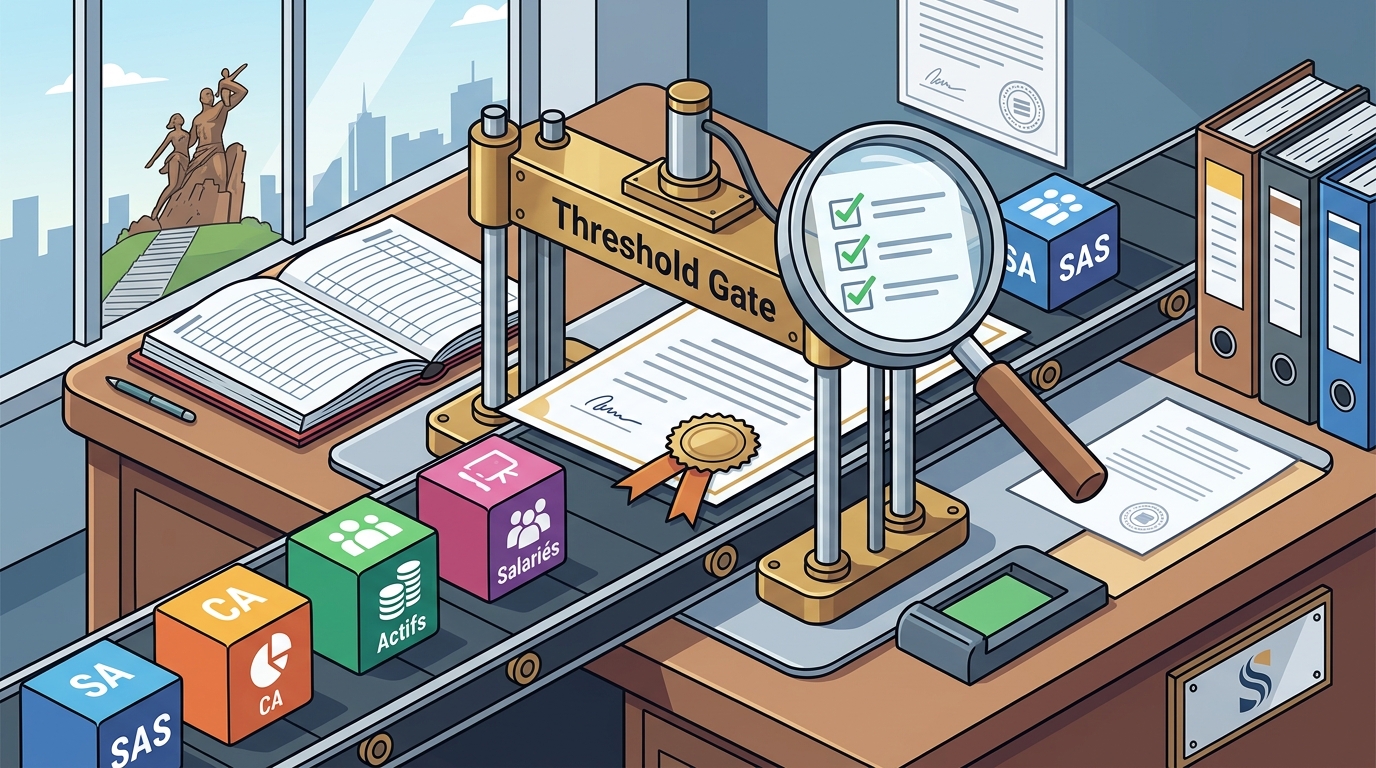
For the Société à Responsabilité Limitée (SARL), the most common structure for small and medium-sized enterprises in Senegal, the audit requirement is conditional. A SARL is only required to appoint a statutory auditor if it exceeds two of the following three thresholds in two consecutive fiscal years. These thresholds are designed to identify companies that have grown large enough to pose a risk to third parties. The specific limits are defined in the OHADA uniform acts and are adjusted periodically to reflect economic changes. For additional details, review our guide on creating and restructuring a business in Senegal.
The three key metrics are annual turnover, total assets, and the number of employees. If your SARL exceeds the limits for turnover and assets, or turnover and employees, or assets and employees, you must appoint an auditor. For example, if your company has a high number of staff but modest assets, you might not need an auditor unless the other two criteria are also met. This flexibility allows smaller businesses to avoid the cost of a full statutory audit while they are still in their growth phase. However, once you cross the line, the obligation becomes permanent until you fall back below the thresholds for two consecutive years.
Specific Rules for the SAS
Choosing the Right Auditor in Senegal
When you are required to appoint an auditor, you must choose a professional who is registered with the Ordre des Experts-Comptables du Sénégal (OEC). This professional body regulates the accounting and auditing profession in the country. The auditor must be independent and cannot have any financial or personal ties to the company that would compromise their objectivity. This independence is a legal requirement, not just a best practice. It ensures that the audit opinion is reliable and that the financial statements can be trusted by banks, investors, and regulatory bodies.
The process of appointing an auditor involves a formal resolution by the shareholders or the board of directors. The auditor is typically appointed for a fixed term, often six years, which can be renewed. This term is designed to ensure continuity in the audit process while also allowing for periodic reassessment of the auditor's performance. The auditor's fees are a significant operational cost, and they should be included in your business plan. For larger companies, the cost of the audit can be substantial, but it is a necessary investment in corporate compliance and credibility.
Consequences of Non-Compliance
Failing to appoint a statutory auditor when required can have serious legal and financial consequences. The company may be subject to fines and penalties from the commercial court. More importantly, the financial statements may be deemed invalid, which can affect the company's ability to obtain financing or enter into contracts. Banks and other lenders often require audited financial statements as a condition for credit. Without them, you may find it difficult to access the capital you need to grow your business.
Non-compliance can also damage the reputation of the company and its directors. In the event of a dispute or a legal challenge, the absence of a statutory audit can be used against the company. It suggests a lack of governance and may raise questions about the integrity of the financial reporting. To avoid these risks, it is essential to monitor your financial metrics regularly and to plan for the appointment of an auditor when necessary. Sunulex can help you track your compliance status and ensure that you are always in line with the legal requirements.
Key Takeaways
- Sociétés Anonymes (SA) must always appoint a statutory auditor.
- Sociétés à Responsabilité Limitée (SARL) only need an auditor if they exceed two of three financial thresholds.
- Sociétés par Actions Simplifiée (SAS) can choose to mandate an audit in their statutes.
- The auditor must be a registered professional from the Ordre des Experts-Comptables du Sénégal.
- Audit fees are a significant cost that should be included in your business plan.
- Non-compliance can lead to fines and difficulties in obtaining financing.
Frequently Asked Questions
What are the financial thresholds for a SARL to require an audit?
A SARL must appoint an auditor if it exceeds two of the following three limits: annual turnover, total assets, or the number of employees. The specific amounts are defined in the OHADA uniform acts.
Can a SAS choose not to have an auditor?
Yes, a SAS is not required by law to have an auditor unless its statutes mandate it or it exceeds the financial thresholds for a SARL. The decision is made during the drafting of the company's bylaws.
Who appoints the statutory auditor?
The statutory auditor is appointed by the shareholders or the board of directors, depending on the company's legal form. The appointment is made by a formal resolution.
How long is the term of a statutory auditor?
The statutory auditor is typically appointed for a term of six years. This term can be renewed, but it allows for periodic reassessment of the auditor's performance.
What happens if I fail to appoint an auditor when required?
Failing to appoint an auditor can result in fines and penalties. It can also make your financial statements invalid, which can affect your ability to obtain financing or enter into contracts.
Conclusion
Understanding when to hire an auditor is a critical part of corporate compliance in Senegal. Whether you are forming a SA, a SARL, or a SAS, the rules are clear and must be followed to ensure the legal validity of your financial statements. Sunulex provides expert guidance on these requirements, helping you to structure your company in a way that meets your strategic goals while remaining fully compliant with OHADA law. To discuss your audit needs and ensure your business is on the right track, contact our team. Learn more: Contactez Le Cabinet Sunulex.